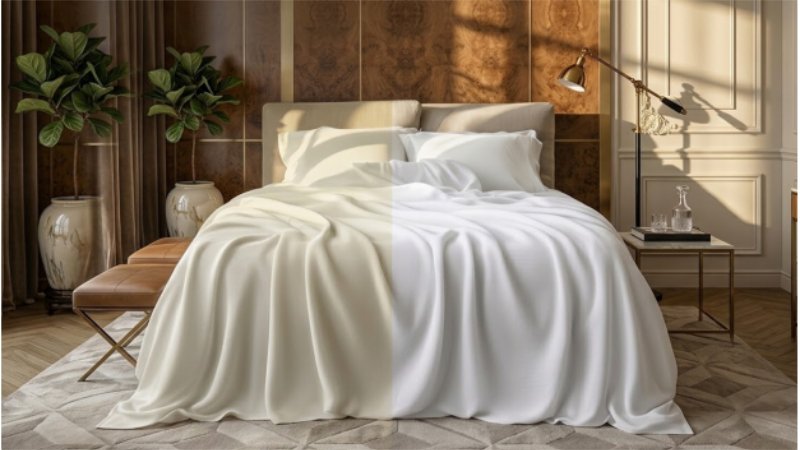
When a purchasing manager compares $5 Hotel Bed Sheets to a $7 professional-grade alternative, the math seems simple. Buying 1,000 units of the cheaper option saves $2,000 upfront. On paper, it’s a win for the quarterly budget.
In reality, that “saving” is a Trojan horse. In the high-stress environment of industrial laundering, that $2,000 discount frequently morphs into a $10,000 loss before the fiscal year ends.
How Cheap Hotel Sheets Cost You More at the End?
Why does a $7 sheet like the Icon T-200 outperform the bargain bin? It comes down to the “Cost-per-Wash” metric.
| Expense Variable | The “Bargain” $5 Sheet | DZEE Icon T-200 ($7) |
| Upfront Price | $5.00 | $7.00 |
| Survival Rate | 25–30 Laundering Cycles | 100+ Laundering Cycles |
| Annual Replacements | 3 to 4 times per year | Once per year |
| Total Annual Cost | $15.00 – $20.00 | $7.00 |
| Hidden Labor | High (Constant re-ordering) | Minimal (Reliable stock) |
| Guest Perception | High risk of “pilling” | Crisp, premium feel |
By investing $2 more at the start, you aren’t just buying fabric; you are slashing your annual linen overhead by over 50%.
How is the Pricing of Hotel Sheets Determined?
The pricing of quality hotel bed sheets isn’t random. To understand why some sheets fail, we must examine the fibers under a microscope. Three distinct factors determine quality:

1. The Length of the Fiber
Cheap textiles use “short-staple” cotton, essentially tiny, frayed hairs. Under the intense heat of an industrial dryer, these fibers snap and poke through the surface. This creates pilling, those abrasive little balls that make a bed feel like it was made of sandpaper. High-end options, like our Ryotei T-300 Luxury Cotton, utilize long-staple fibers that stay smooth and structural, wash after wash.
2. The Hybrid “Skeleton”
While 100% cotton is the gold standard for breathability, it is high-maintenance. Our Opal Super Blend utilizes a poly-cotton “skeleton.” The polyester provides the tensile strength to withstand mechanical pressing, while the cotton ensures guest comfort. This blend also dries significantly faster, cutting thousands from your annual utility bills.
3. The “Micro-White” Longevity
Most “budget” Hotel Bed Sheets look bright in the packaging but turn a sickly translucent yellow after five cycles with bleach. DZEE Textiles uses a proprietary Micro-White finish. This isn’t just a surface dye; it’s a treatment that maintains optical brightness for the entire lifespan of the sheet.
The Hidden “Soft Costs” of Low Quality
Beyond the invoice, low-quality linens damage your operation in ways that aren’t immediately visible:
- The Transparency Trap:As cheap sheets thin out, they become see-through. If a guest can see the mattress protector through the sheet, your brand immediately loses “luxury” status.
- The Housekeeping Bottleneck:Inferior fabrics shrink unevenly. If a king sheet loses 10% of its width, your staff will spend an extra 3 minutes per room struggling to fit the corners. In a 100-room property, that is 5 hours of wasted labor every single day.
- The Review Echo Chamber:“Scratchy sheets” is a recurring theme in 1-star reviews. One bad online comment can cost you dozens of potential bookings.
Pro-Tips: How to Double the Life of Your Linens
Even the best DZEE linens need proper care to reach their full ROI potential:
- The 3-Par Strategy:Always have three sets per bed: one in use, one in the wash, and one “resting.” This rest period allows cotton fibers to rehydrate and regain their shape.
- Stop “Cooking” the Fabric:Excessive heat makes fibers brittle. Fold your Hotel Bed Sheets while they are still slightly warm to the touch to avoid the need for high-heat ironing.
- Chemical Neutralization:Ensure your laundry team is properly balancing pH levels. Residual bleach is the #1 cause of “mystery holes” in Hotel Bed Sheets bedding.
Frequently Asked Questions
1. Is a higher thread count always more durable?
Not necessarily. High thread counts in “bargain” Hotel Bed Sheets often use thin, fragile strands to inflate the number. Professional-grade linens, like our Ryotei T-300, use thicker, high-tensile fibers that survive industrial washing much longer than a flimsy “high count” consumer sheet.
2. Why do my cheap white sheets turn yellow or gray?
Lower-priced linens often use temporary brighteners that wash out quickly. DZEE uses a Micro-White finish engineered to bond with the fibers, ensuring the fabric stays “hotel-white” even after repeated exposure to bleach and hard water.
3. What is the best fabric blend for a busy hotel?
A 60/40 poly-cotton blend is the industry “sweet spot.” The polyester provides a durable “skeleton” that resists shrinking and speeds up drying times, while the cotton ensures the soft, breathable feel guests expect.
4. Why is the “3-Par Rule” so important?
If you don’t let linens “rest,” the fibers stay stressed and brittle. A 3-Par system (one on the bed, one in the wash, one in the closet) allows cotton to rehydrate and recover its shape, which can nearly double the lifespan of your investment.
DZEE Textiles: The No. 1 Supplier of Hotel Bed Sheets Supplies in the USA
With over two decades of experience and a client base of over 10,000 properties, DZEE Textiles has mastered the science of hotel supplies. We don’t just ship boxes; we help hoteliers manage their overhead.
We offer the consistency your brand demands, whether you choose the refined luxury of our Forte Bed Sheets line or the rugged reliability of our Icon collection. Most of our products are stocked in regional warehouses and are ready to ship within 24-48 hours.
Final Words
Consider the true cost: a discarded, low-quality sheet (the “$5 sheet”) is a drain on your profit margin, an expensive gamble. In contrast, the “$7 sheet” represents a strategic asset, built for longevity and better value over time. Contact us for more details.