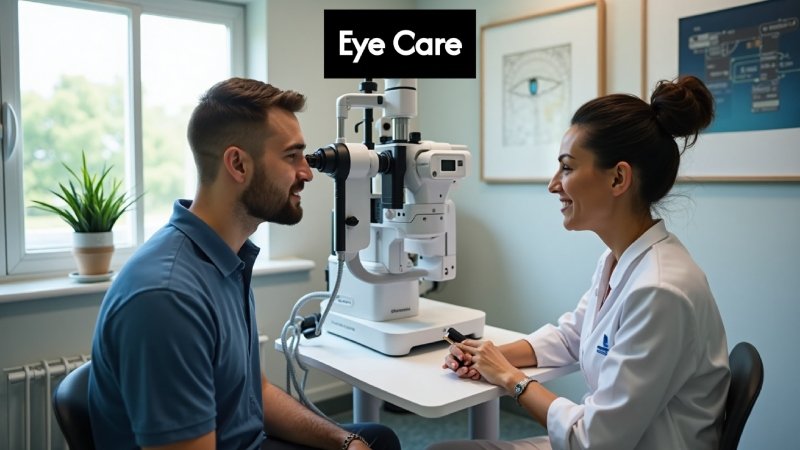
Refined eye care is not about excess. It is about precision, comfort, and confidence. For patients who expect thoughtful service and carefully tailored medical decisions, vision care should feel every bit as intentional as the rest of life. Edward C. Wade, M.D., F.A.C.S., has described Eye Center of Texas in broad terms as a place where LASIK planning should feel precise, personalized, and aligned with the way patients live. That idea resonates because modern eye care works best when it respects both the eye and the person behind it.
A distinctive eye health approach in Texas can mean something very practical. It can mean access to medical, surgical, and refractive expertise in one system. It can mean careful evaluation before treatment, realistic guidance instead of generic promises, and technology that is used to improve decision-making rather than simply impress patients. For people who value quality, that combination matters because eye health affects daily ease, confidence, and visual freedom in ways that are easy to underestimate until something changes.
The National Eye Institute notes that eye conditions can affect everyday life and quality of life, and the FDA’s LASIK resources similarly frame refractive surgery as a decision that should be guided by candidacy, risks, and expected impact on usual activities.
Why premium eye care is about precision, not just polish
Premium eye care is often misunderstood as branding, aesthetics, or convenience alone. In reality, its value comes from precision. Precision means the doctor is looking closely at the cornea, tear film, lens status, retinal health, and visual goals before offering a recommendation. Precision means the treatment is chosen because it fits the eye, not because it is the newest option in a brochure.
That matters because visual comfort and visual quality are not abstract luxuries. Dry eye disease alone has been shown to reduce quality of life, visual function, and workplace performance, even when the problem seems less dramatic than a major eye disease. Multiple studies and reviews report that dry eye symptoms are associated with poorer general vision, more ocular pain, more role limitation, and lower physical and mental quality of life. Premium care begins when a practice treats those details as central instead of secondary. [1][2][3]
Real luxury in medicine is not extravagance. It is the feeling that nothing important is being handled casually.
How a tailored approach can better protect both vision and comfort
A tailored approach protects patients because eye care decisions are rarely one-size-fits-all. The uploaded perspectives guide emphasizes customization, candidacy, risk tolerance, technology preference, recovery priorities, and lifestyle improvement as core elements of vision decision-making. That framework makes sense in real life because the right plan for someone with dry eye, irregular corneal anatomy, heavy screen use, or high visual demands may be very different from the right plan for someone with straightforward refractive error and minimal ocular surface symptoms.
The dry eye literature supports that personalized thinking. Reviews on epidemiology and management identify age, medications, contact lens wear, digital screen use, low-humidity environments, sleep quality, and systemic disease as meaningful contributors to dry eye risk and symptom severity. [4][5]
That means the best recommendation is often the one shaped by context. It also means comfort deserves as much attention as acuity, because patients do not experience their vision in isolated measurements. They experience it across long days, screens, travel, work, reading, and social life.
Patients rarely want the most complicated answer. They want the answer that fits their eyes and their lives most honestly.
What today’s technology-forward care can offer beyond the basics
Technology-forward care offers more than faster procedures or sleek equipment. It offers better planning. Advanced diagnostics can help define corneal shape, tear film quality, refractive error, and structural eye health more clearly before a surgeon recommends LASIK, cataract surgery, or another intervention. In refractive care, planning matters because candidacy and customization are major drivers of satisfaction and safety. The FDA’s LASIK information emphasizes careful patient selection, informed consent, and realistic expectations, while the LASIK Quality of Life Collaboration Project was specifically designed to better understand postoperative visual symptoms and difficulties in usual activities. [7]
In the practice facts you provided, the refractive program includes LASIK, PRK, EVO Visian ICL, and near-vision solutions, while the broader medical system includes cataract, glaucoma, cornea, retina, and cross-linking services. That type of range matters because technology is most useful when it expands the ability to match treatment to the patient, not when it pressures every patient toward the same procedure.
Technology earns trust when it narrows uncertainty, not when it replaces judgment.
Why high standards matter when you are considering LASIK or other advanced options
High standards matter most when the stakes are personal. LASIK can be life-changing for the right candidate, but it is still real surgery and not the right fit for every eye. The FDA notes that LASIK carries risks and side effects, and its patient education materials stress the importance of understanding candidacy, complications, and quality-of-life considerations before moving forward. [7]
One of the clearest reasons standards matter is dry eye. Reviews of post-LASIK dry eye consistently describe it as the most common complication after corneal refractive surgery and a frequent source of dissatisfaction when preoperative screening and treatment are not thorough. [9][10]
Practical surgical guidelines also explain that preexisting symptomatic or asymptomatic dry eye can increase the risk of poorer outcomes after ocular surgery if it is not identified and managed carefully. [11]
That is why the most refined surgical experience is not the one that feels aggressively sales-oriented. It is the one that shows restraint, screening discipline, and willingness to say when an alternative may be better than LASIK.
How education and shared decision-making create a more confident experience
Education changes the patient experience because it replaces vague optimism with informed confidence. Shared decision-making is not just a communication style. It is part of quality. When patients understand their options, they can align the treatment with what matters most to them, whether that is convenience, independence from glasses, night vision quality, a conservative approach to risk, or long-term flexibility.
The dry eye management literature repeatedly emphasizes realistic expectations as a key part of better outcomes and better patient satisfaction. That lesson applies more broadly across refractive and medical eye care. Patients do better when they understand what a procedure can improve, what it cannot change, what tradeoffs are possible, and what recovery may involve.
What does it mean to have multiple solutions under one roof?
Having multiple solutions under one roof changes the conversation because it broadens the menu of honest options. If a patient is not a strong LASIK candidate, PRK or EVO ICL may be part of the discussion. If cataract, glaucoma, corneal disease, or retinal pathology complicates the picture, those issues do not have to be treated as separate worlds.
This type of integrated model can be especially valuable for patients who do not want fragmented care. The practice facts describe a multi-location, multi-specialty structure covering refractive surgery, cataract surgery, cornea, glaucoma, retina, keratoconus care, and oculoplastic services, with co-management pathways that keep communication flowing between ophthalmologists and optometrists.
That breadth matters because complex eyes often need nuanced answers. A refined care experience is often defined by how many dead ends it removes from the patient’s path.
How can a long-standing Texas practice blend innovation with trust?
Innovation is most valuable when it is anchored by experience. A long-standing practice can offer that balance by combining updated technology with years of pattern recognition, complication management, and procedural judgment. In the information you provided, the practice has roots going back to 1990, more than 75,000 LASIK procedures and more than 80,000 cataract surgeries performed by the surgical team, and recognized expertise in areas such as corneal cross-linking, premium cataract technology, and integrated refractive planning.
That mix of experience and innovation is important because trust grows when patients sense that technology is being used by people who know when to push forward and when to slow down. The facts you provided also note recognition for high procedural volume, advanced IOL adoption, and surgeon expertise. Those distinctions do not guarantee that every patient should choose surgery, but they do help explain why a mature, technology-forward practice can feel reassuring to someone seeking both sophistication and substance.
What to expect when eye care is designed around the way you live?
When eye care is designed around the way you live, the experience becomes more relevant from the first visit. Discussions are less abstract. They focus on reading habits, screen demands, night driving, travel, appearance preferences, tolerance for corrective lenses, recovery priorities, and long-term goals. The uploaded perspectives guide is especially helpful here because it highlights lifestyle, occupational vision demands, convenience, technology attitudes, recovery timing, and risk tolerance as real decision drivers.
That lifestyle-centered approach also helps explain why eye health belongs in the broader conversation about well-being and refinement. Vision affects how much effort daily life requires. It affects how polished, composed, and comfortable people feel in their routines. It affects whether convenience feels natural or is constantly interrupted. A recent body of dry eye research underscores how much ocular surface symptoms can influence not just vision, but mood, work performance, and mental well-being. Visit World Fluxora for more information.
The final takeaway is simple. Refined eye care is not about making medicine look luxurious. It is about making vision decisions feel thoughtful, customized, and worthy of the role eyesight plays in a well-lived life. When a practice combines advanced options, strong screening, patient education, and integrated expertise, the result can feel less like a transaction and more like a standard worth expecting.
References:
[1] Lee W. Guo, E. Akpek, The negative effects of dry eye disease on quality of life and visual function, 2020.
[2] M. K. Morthen, M. Magno, T. Utheim, H. Snieder, C. Hammond, J. Vehof, The physical and mental burden of dry eye disease: A large population-based study investigating the relationship with health-related quality of life and its determinants, 2021.
[3] Å. A. Erøy, T. Utheim, Vibeke Sundling, Cross-sectional Study Exploring Vision-related Quality of Life in Dry Eye Disease in a Norwegian Optometric Practice, 2023.
[4] Alexis Ceecee Britten-Jones, Michael T. M. Wang, Isaac Samuels, Catherine Jennings, Fiona Stapleton, Jennifer Craig, Epidemiology and Risk Factors of Dry Eye Disease: Considerations for Clinical Management, 2024.
[5] Jeonghyun Kwon, Amirhossein Moghtader, Christie Kang, Zahra Bibak Bejandi, Sumaiya Shahjahan, Ahmad F Alzein, A. Djalilian, Overview of Dry Eye Disease for Primary Care Physicians, 2025.[6] Paramdeep Bilkhu, Z. Sivardeen, Connie Chen, Jennifer Craig, Kylie Mann, Michael T. M. Wang, Saleel Jivraj, Karim Mohamed-Noriega, David E. Charles-Cantú, James Wolffsohn, Patient-reported experience of dry eye management: An international multicentre survey, 2021.
[7] U.S. Food and Drug Administration, LASIK Quality of Life Collaboration Project, June 17, 2021.
[8] U.S. Food and Drug Administration, What are the risks and how can I find the right doctor for me?, August 8, 2018.
[9] Atena Tamimi, Farzad Sheikhzadeh, Sajjad Ghane Ezabadi, Muhammad Islampanah, Peyman Parhiz, Amirhossein Fathabadi, Mohadeseh Poudineh, Zahra Khanjani, Hossein Pourmontaseri, Shirin Orandi, Reyhaneh Mehrabani, M. Rahmanian, N. Deravi, Post-LASIK dry eye disease: A comprehensive review of management and current treatment options, 2023.
[10] Sridevi Nair, M. Kaur, Nitasha Sharma, J. Titiyal, Refractive surgery and dry eye – An update, 2023.
[11] P. Karpecki, C. Prokopich, L. Racine, Etty Bitton, B. Caffery, P. Harasymowycz, L. Michaud, V. Pegado, Jean-Sébastien Dufour, P. Neumann, A. Webber, J. Ashkenas, Dry Eye Diseases and Ocular Surgery: Practical Guidelines for Canadian Eye Care Practitioners, 2017.